

When people search online, their first contact with your page is generally your title tag. A title tag is not just a little piece of code. It is a digital handshake. The right title tag can make your page appear in search and even entice your searchers to click! Sadly, title tags are among the most under-utilized on-page SEO elements.
In this article, we will discuss why the title tag is important for optimizing a webpage, disclose the purpose of a title tag in HTML, and cover SEO-based best practices that help with page performance in search engine results.
In this blog, we’ll break down:
Title Tag in HTML
What is the Purpose of Title Tag in HTML?
Why Are Title Tags Important for SEO?
What is the Difference Between a Good and Bad Title Tag?
How Do You Write a Title Tag That Actually Ranks?
Title Tag in HTML
In HTML, the title tag is a vital element of code that provides the title of a webpage. It tells browsers and search engines what the page is about.
You’ll find it:
- In search engine results (as the clickable blue headline)
- In browser tabs
- In social media previews
HTML example:
<title>Top SEO Tips for Beginners | YourSite</title>
This one line can decide whether your page gets clicks—or gets ignored.
What is the Purpose of Title Tag in HTML?
The main purpose of a title tag is to give search engines and users a clear summary of your page’s content. Think of it as the headline of your digital storefront.
A strong title tag:
- Communicates the topic of the page
- Improves relevance for search queries
- Increases your chances of clicks in search results
It’s one of the few chances you get to make a first impression in search.
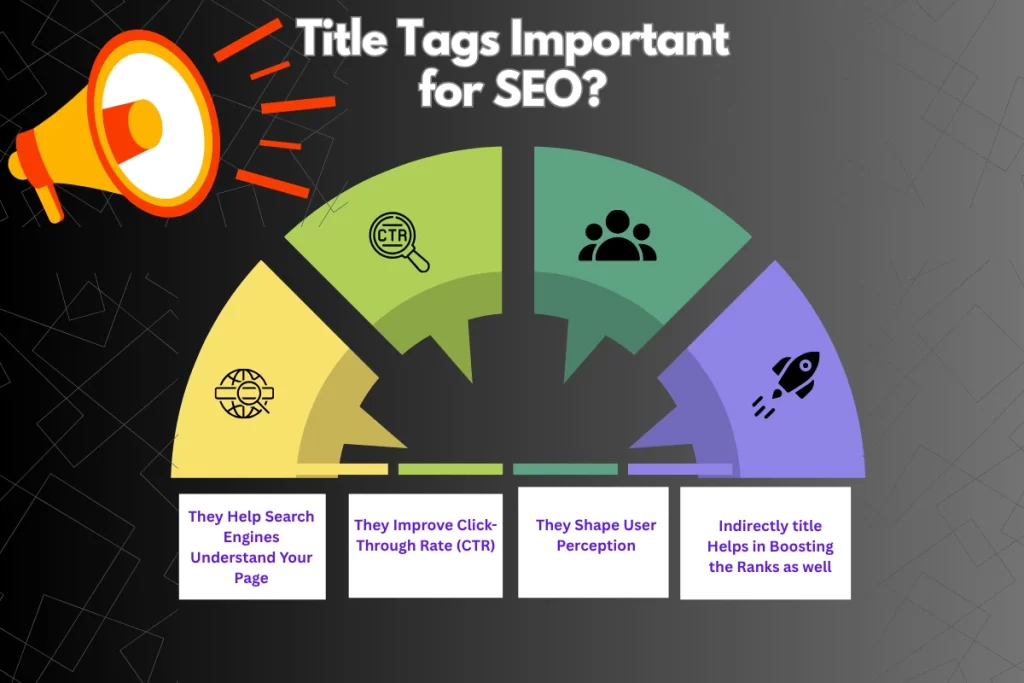
Why Are Title Tags Important for SEO?
Below given are the importance of Title tags:
1. They Help Search Engines Understand Your Page
Search engines use title tags to figure out what your page is about. A well-written tag signals keyword relevance and helps search bots rank your content appropriately.
2. They Improve Click-Through Rate (CTR)
A study by Moz and Backlink reveals that pages with clear, compelling title tags enjoy higher CTRs. This means more traffic and better engagement.
3. They Shape User Perception
A vague or misleading title tag may cause users to bounce. A clear, trustworthy title creates confidence and encourages time spent on your site.
4. Indirectly title Helps in Boosting the Ranks as well
Let’s say you got an attractive title and people started landing on the ranked page because of that. Now the users are finding the content relevant and are spending 2 to 3 minutes on that page.
It shows to the search engines that the page is relevant and provides the best user experience possible. This can help in boosting the ranks further.
What is the Difference Between a Good and Bad Title Tag?
| Feature | Good Title Tag | Bad Title Tag |
| Keyword Usage | Smart keyword placement | Overstuffed or missing keywords |
| Length | 50–60 characters, full display in SERPs | Too long or too short |
| Clarity | Clearly defines the page’s topic | Misleading or unclear |
| Originality | Unique to the page | Copied across multiple pages |
How Do You Write a Title Tag That Actually Ranks?
SEO experts like Neil Patel suggest following a few proven techniques:
- Place your primary keyword at the beginning
- Add action or power words like “Guide,” “Tips,” or “Best”
- Keep it under 60 characters to prevent search truncation
- Make sure it matches the page’s actual content
- Avoid duplicating title tags across different pages
Example: Before: Blog | CompanyName
After: SEO Title Tag Tips to Boost Google Rankings | CompanyName
Why Are Titles So Important in Content Strategy?
Every piece of content competes for attention. Your title tag is what helps you stand out. It tells both search engines and users: “Here’s why you should click.”
For students building digital portfolios or SEO managers running campaigns, a strong title strategy improves:
- Organic visibility
- On-page SEO
- Internal linking structure
- Conversion potential
Simply put, it’s the backbone of a discoverable and clickable web presence.
Real-Life Example: The Power of an Optimized Title Tag
An eCommerce website selling organic teas had a blog post titled:
“All About Herbal Infusions”
After updating the title tag to:
“Best Organic Herbal Teas for Stress & Sleep – 2024 Guide”
Their traffic to that blog post increased by 32% in 3 weeks. More users searched for “best organic teas for sleep”— and the new title matched exactly what they wanted.
Final Thoughts
Why are title tags so important? Because they’re more than just SEO checkboxes—they are front-facing hooks that drive your traffic, visibility, and trust.
A well-optimized title tag helps your page rank higher, get noticed in crowded SERPs, and improve the overall user journey. And in our search-driven world today, that is not optional – it is essential.
Regardless of whether you are learning SEO or perfecting your process, always remember to pay attention to how nuanced a title tag is to optimizing a webpage.
FAQs
Q1. What is the importance of a title tag in SEO?
It helps your page rank better, improves CTR, and sets user expectations.
Q2. What is the ideal length for a title tag?
Stick to 50–60 characters so it displays fully in search results.
Q3. Can duplicate title tags affect SEO?
Yes. They confuse search engines and weaken page relevance.
Q4. Should I use keywords in every title tag?
Yes, but use them naturally—avoid keyword stuffing.
Q5. Are title tags and H1 tags the same?
No. The title tag shows up in search results and browser tabs; the H1 appears as the main visible heading on the page.

Mohit Verma I am an experienced professional with 9+ years of experience in Search Engine Optimization. I am on a mission to provide industry focused job oriented SEO so the students/mentees can get their dream SEO job and and start working from day 1.