
It was late at night when Ravi, an eCommerce store owner, realized something strange.
He had uploaded 500 new products in the last month, but only a handful were showing up in Google search.
Confused, he wondered — “Did I miss a step? Isn’t Google supposed to find everything on its own?”
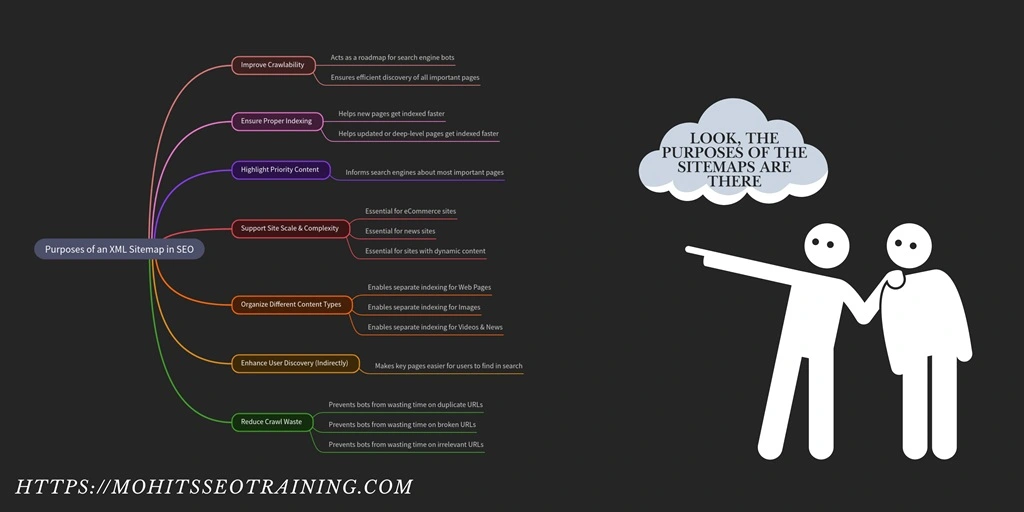
That’s when his SEO consultant explained: “Think of your website as a huge city. Every product page, every blog, every service is a building. Now, how will Google’s crawlers — the visitors to your city — know where to go? They need a map. That map is called a sitemap.”
Just like travelers rely on roadmaps to avoid getting lost, search engines rely on sitemaps to discover, crawl, and index your website efficiently. Without it, your most valuable pages may never be seen.
And that’s exactly where the purpose of a sitemap in SEO begins.
Why is the Purpose of the Sitemap in SEO?
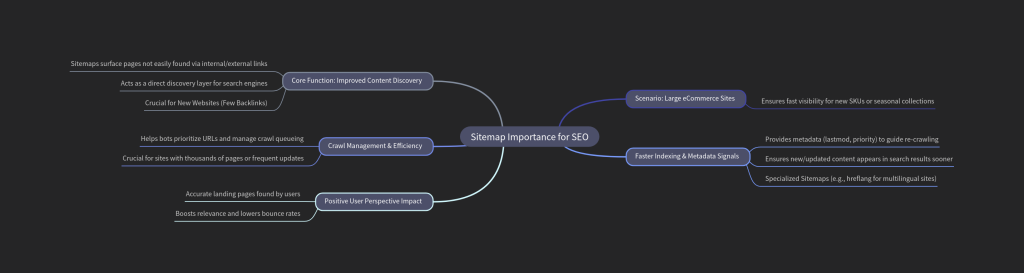
A sitemap matters because it improves content discovery, helps manage crawl budget, and accelerates the route from crawl to index.
For complex sites, sitemaps prevent important pages from becoming buried and ensure search engines understand site structure.
Discovery perspective: Sitemaps surface pages that may not be easily found via internal links or external backlinks. They act as a direct discovery layer.
Crawl perspective: Sitemaps help bots prioritize URLs and manage crawl queueing—especially crucial for sites with thousands of pages or frequent updates.
Indexing perspective: Sitemaps provide metadata (lastmod, priority) that tells search engines when to revisit pages, which helps new and updated content appear in search results sooner.
User perspective: Faster discovery and correct indexing mean users find accurate landing pages — boosting relevance and lowering bounce rates.
Scenario: large eCommerce sites: Without sitemaps, new SKUs or seasonal collections can remain undiscovered amid thousands of URLs. A product sitemap ensures fast visibility.
Scenario: new websites: Fresh sites with few backlinks rely on sitemaps to signal their valuable pages for early indexing.
Scenario: complex/multilingual sites: hreflang sitemaps reduce confusion and serve the correct language page to users, which improves CTR and user experience.
Nanak Accountants: We prioritized authoritative resource pages and practitioner credentials in the sitemap to reinforce Expertise and Authoritativeness; search engines picked up those pages more reliably.
ByronBayAirport Transport: By adding route and service pages to sitemaps and featuring verified safety credentials, we enhanced Trust and helped booking pages index faster.
Serenity Hostels: Listing verified guest reviews and virtual tour videos in sitemaps raised Experience signals and improved visibility for local, high-intent queries.
What is a Sitemap in SEO and How Does It Work?
A sitemap is a structured list of your site URLs that tells search engines what content exists and where it lives.
It works as a roadmap—especially useful for large, new, or complex sites where discovery might otherwise be slow.
XML Sitemap (technology): Designed for search engines, an XML sitemap lists URLs with optional metadata (lastmod, changefreq, priority) to guide crawlers.
HTML Sitemap (technology): Built for users, an HTML sitemap helps visitors find pages and can indirectly help SEO by improving internal linking. See the deeper comparison in our article on the Difference Between HTML and XML Sitemap.
TXT Sitemap (technology): A plain list in text form — simple, quick to generate, and sometimes used for tiny sites or legacy workflows.
eCommerce (nature of business): Product and category-heavy stores need sitemaps to surface thousands of SKUs and prevent orphaned product pages.
News websites (nature of business): News and publisher sitemaps (including Google News sitemaps) accelerate indexing of fresh articles.
Local service sites (nature of business): Sitemaps highlight service pages, location landing pages, and offerings that matter for local search visibility.
Image sitemaps (content): Include image URLs and metadata so search engines index product photos, infographics, or galleries accurately.
Video sitemaps (content): Provide video metadata (duration, thumbnail, description) so videos can appear in video search results and rich snippets.
Multilingual / hreflang sitemaps (content): Explicitly list language/region variants so search engines serve the correct locale to users.
Other scenarios: Job postings, event feeds, mobile app deep-links, and API endpoints can all benefit from specialized sitemaps or feeds.
Sitemaps adapt to your technology and business needs — they are not one-size-fits-all.
Nanak Accountants: For the accounting firm we prioritized service pages and practitioner bios in the XML sitemap and used HTML sitemaps for clients. That highlighted practical experience and improved crawl coverage for tax and compliance pages.
ByronBayAirport Transport: We created an image sitemap for fleet photos and a route sitemap for service pages, while adding service credentials on each page to increase Authoritativeness.
Serenity Hostels: We used video sitemaps for virtual tours and multilingual sitemaps for international guests, and included guest-curated content to show Experience and Trust.
What Role Does a Sitemap Play in Website Indexing?
A sitemap acts as a priority list that guides crawlers to the URLs you want indexed first.
It helps search engines understand which pages you update often and which pages hold long-term importance.
A sitemap speeds indexation of new content by explicitly declaring recent changes.
If you add new product pages or publish time-sensitive articles, a sitemap signals the update so search engines can re-visit those URLs sooner.
Nanak Accountants: We set priority for case studies and regulatory updates in the sitemap so Google recognized fresh, expert content quickly.
ByronBayAirport Transport: Adding booking and timetable pages to the sitemap improved indexing for transaction pages and route updates.
Serenity Hostels: Including seasonal offers and activity pages in sitemaps ensured these timely pages indexed quickly during peak booking windows.
How Does a Sitemap Benefit SEO Performance?
- A sitemap improves discovery by listing important URLs so crawlers don’t miss high-value pages.
It speeds up indexing for new or updated content and signals page priority and change frequency. - A sitemap improves crawl efficiency by helping bots allocate crawl budget to your most important pages.
It reduces missed pages and redirects crawler activity away from low-value URLs, which helps search engines work smarter on your site. - A sitemap aids indexing by explicitly naming canonical pages and highlighting fresh content.
When you include lastmod and priority attributes, search engines can detect updates faster and re-index selectively. - From a user perspective, sitemaps indirectly help users by making search engines surface the right landing pages — the ones that match intent.
Better discovery and indexation mean users land on the most relevant product, article or service page faster.
Nanak Accountants: We documented client case studies and practitioner bios in the sitemap and added structured data to showcase real experience. This strengthened Expertise and Trust signals, which helped search engines surface key service pages faster.
ByronBayAirport Transport: We used a tailored XML + image sitemap for vehicle galleries and service routes, and added staff profiles and safety certifications to the site. That combination improved Authoritativeness and sped up indexing for route and booking pages.
Serenity Hostels: We included video and image sitemaps for property tours and added guest testimonials in structured data. Experience and Trust improvements made listing pages appear more prominently in local searches.
Do All Websites Need a Sitemap for SEO?
Essential: Large eCommerce sites, news publishers, directories, and multilingual sites should always use sitemaps to ensure complete discovery and efficient indexing.
Optional: Small brochure sites with simple navigation and fewer than ~50 pages may not strictly require a sitemap if internal linking and backlinks are healthy.
Recommended: Even small sites often benefit from a simple sitemap as a safety net—especially when you add new pages or update content frequently.
Nanak Accountants: For their multi-service practice we used a sitemap to make tax guides and client resources discoverable; this reinforced their Expertise to search engines and users.
ByronBayAirport Transport: For their expanding route network the sitemap prevented newly added routes from being overlooked and supported Authoritativeness in local searches.
Serenity Hostels: Even though their site was modest, we recommended a sitemap to ensure seasonal pages and virtual tours indexed reliably, improving trust signals.
How to Create and Submit a Sitemap for SEO?
Use plugins and tools: CMS plugins like Yoast SEO, Rank Math, or platform-specific apps generate and update sitemaps automatically.
Manual creation: For custom sites use sitemap generators or code frameworks to output valid XML with proper metadata.
Submit your sitemap: Upload it to your site root (example.com/sitemap.xml) and submit it via Google Search Console under the “Sitemaps” report to monitor discovery and indexation.
Keep your sitemap clean: only include canonical, indexable URLs and update it when content changes. For platform differences and advanced XML options, check our post on Types of Sitemaps in SEO.
Nanak Accountants: We taught the in-house team how to generate XML sitemaps and submit them in Search Console, and documented process steps so Expertise is reproducible.
ByronBayAirport Transport: We set up an automated sitemap pipeline for route updates and image galleries to ensure timely indexing and maintain operational trust.
Serenity Hostels: We implemented a workflow to auto-update sitemaps when new room inventory or tours were published, helping guests find up-to-date listings.
What are the Common Mistakes in Using Sitemaps for SEO?
Including non-canonical or duplicate URLs: Listing duplicates confuses crawlers and dilutes crawl budget; always include canonical URLs only.
Submitting blocked or noindex pages: Don’t list pages that you’ve deliberately blocked from indexing — this creates mixed signals and wastes crawl budget.
Not updating your sitemap after major site changes: If the sitemap is stale, search engines will not see newly added or removed content promptly.
Listing broken or orphaned pages: Broken links or pages with 404 status in your sitemap are red flags and reduce index efficiency.
For more sitemap types and what to include, refer to our deeper guide on Types of Sitemaps in SEO.
Nanak Accountants: We audited their sitemap, removed legacy noindex pages, and preserved authoritative resource pages—reinforcing Trust and improving crawl health.
ByronBayAirport Transport: We fixed broken logistics pages in the sitemap and implemented canonical rules so search engines saw the correct booking pages.
Serenity Hostels: We removed outdated seasonal pages and ensured all live offers were canonical and indexed, improving user trust and search accuracy.
FAQs
What does a sitemap do in SEO?
A sitemap guides search engines to your important pages and tells them when those pages change. It speeds discovery and helps indexation.
Why do we need a sitemap if Google can crawl sites automatically?
While Google crawls automatically, a sitemap ensures no valuable pages are missed — especially for new, large, or poorly linked content.
Does having a sitemap improve rankings directly?
A sitemap does not directly change rankings. It improves discovery and indexation, which create opportunities for those pages to rank.
How often should a sitemap be updated?
Update your sitemap whenever you add, remove, or significantly modify content; automated sitemaps are ideal for dynamic sites.
Can a sitemap fix indexing issues?
A sitemap can help diagnose and surface missing pages, but indexing problems often require technical fixes beyond just the sitemap.
Nanak Accountants: We documented FAQ and process pages in their sitemap and added practitioner proof points; this clarified expertise and led to steadier organic visibility.
ByronBayAirport Transport: We resolved indexing issues by aligning sitemap contents with canonical URLs and adding service credentials to pages, strengthening both crawlability and trust.
Serenity Hostels: We used sitemaps to expose verified reviews and media, which supported trust signals and helped answer common guest queries in search results.
How Mohit’s SEO Training Can Help You With Sitemaps and SEO?
Simplified sitemap workflows: We teach step-by-step sitemap generation, validation, and submission so your team can maintain healthy indexation.
Platform-specific guidance: Whether you use Shopify, Magento, WordPress, or a custom platform, we provide tailored sitemap strategies and implementation checklists.
We incorporate Experience and Expertise signals—author bios, case studies, certifications—into page templates and sitemaps to strengthen Authoritativeness and Trust.
Hands-on audits & fixes: We audit existing sitemaps, remove technical errors, and create action plans that improve discovery and indexing for high-priority pages.
Nanak Accountants: We trained their team to showcase practitioner experience via structured data and sitemap prioritization, making authoritative pages easier to find.
ByronBayAirport Transport: Our training included automated sitemaps for image galleries and route updates plus a content plan to build Authoritativeness for service pages.
Serenity Hostels: We coached the team to include guest experience assets (videos, photos, testimonials) in sitemaps and ensure those assets indexed for local search queries.